Sommelier-led · Portugal, Spain & Italy

+351 961 651 735

Cultural notes

What you're looking at, and why it's there

Background on each region we travel, written down in advance so the first morning isn't spent catching up.

Guests tasting at the Cortes de Cima winery in the Alentejo

Country by country

Portugal, Spain and Italy — what actually differs

Meal times, manners, weather and wine law change at every border. This is the briefing we give before departure.

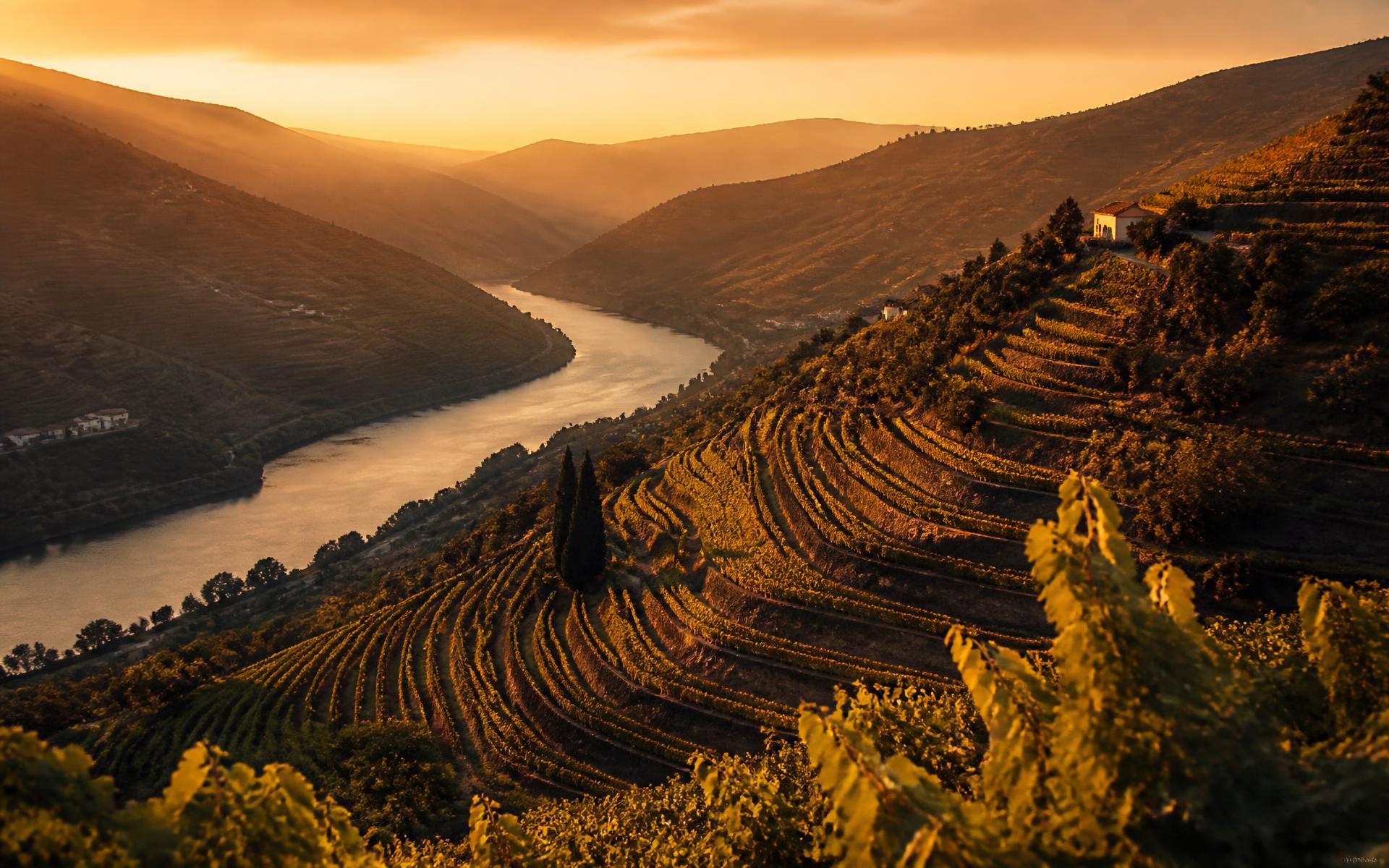
Terraced vineyards above the Douro river in Portugal

Portugal

Lisbon · Sintra · Bairrada · Porto & the Douro · Alentejo

Portugal is the country we know street by street. It is small enough to cross in a day and old enough that every valley kept its own grape, its own bread and its own way of cooking a pig. Nothing here is a copy of somewhere else.

What to expect

  • Lunch is the serious meal. Restaurants fill at 13:00 and empty by 15:00; dinner rarely starts before 20:00 and Alentejo kitchens often close by 22:00.
  • The couvert — bread, olives, cheese, sardine paste — is not free. Wave it away without embarrassment if you would rather save the appetite.
  • Coffee is ordered as um café: a short, dark bica. Asking for a large filter coffee marks you out faster than the accent does.
  • Cash still matters in village cellars and rural tascas; cards are universal in Lisbon and Porto.
  • The Douro is steep. Quinta visits mean gravel, terraces and stairs — one pair of proper shoes solves the whole trip.
  • Tipping is light: rounding up, or five to ten percent for a long dinner, is generous by local standards.

Unexpected surprises

  • Portuguese is not Spanish with a lisp — it is closer to Slavic in sound, full of swallowed vowels and sh sounds. Spanish spoken slowly is usually understood; English is widely spoken by anyone under fifty.
  • Lisbon's July heat is Atlantic, not Mediterranean: 32°C at three, a wind off the river at seven, and a genuinely cool night. Bring a layer.
  • There is far more red wine than the beach-holiday reputation suggests. Portugal drinks its own reds; only a fraction leaves the country.
  • Sintra can be ten degrees cooler and wetter than Lisbon thirty minutes away — the microclimate that made the Romantic gardens possible.
  • Cork oaks are protected by law and stripped by hand every nine years; the number painted on the trunk is the year of the last harvest.
  • Tinned fish is not a joke souvenir. Conserveiras treat vintages of sardines the way a cellar treats vintages of wine.

Quirky wine facts

  • The Douro was demarcated in 1756 — half a century before Chianti and a century and a half before Bordeaux's classification. It is the oldest regulated wine region on earth.
  • Portugal grows around 250 native grape varieties, more per square kilometre than any other country. Touriga Nacional, Baga, Encruzado and Alvarinho are barely planted anywhere else.
  • Port is fortified mid-ferment with grape spirit, which kills the yeast and leaves the natural sweetness intact — the technique the British trade invented to survive the voyage home.
  • Vinho Verde is not a grape and not green: it means 'young wine', drunk within the year, and the slight prickle is what remains of the ferment.
  • In the Alentejo, wine is still made in talhas — clay amphorae used since Roman times, and legally allowed to be tapped from 11 November, St Martin's Day.
  • Colares, on the sand dunes west of Sintra, is one of the few European vineyards never destroyed by phylloxera: the louse cannot move through sand.
Language
Portuguese; English widely spoken in cities
Currency
Euro
Best months
April–June and September–October
Drive time
Lisbon to Porto, three hours; Douro, four

Region by region

LisbonA city rebuilt from an earthquake, on top of a Roman one+
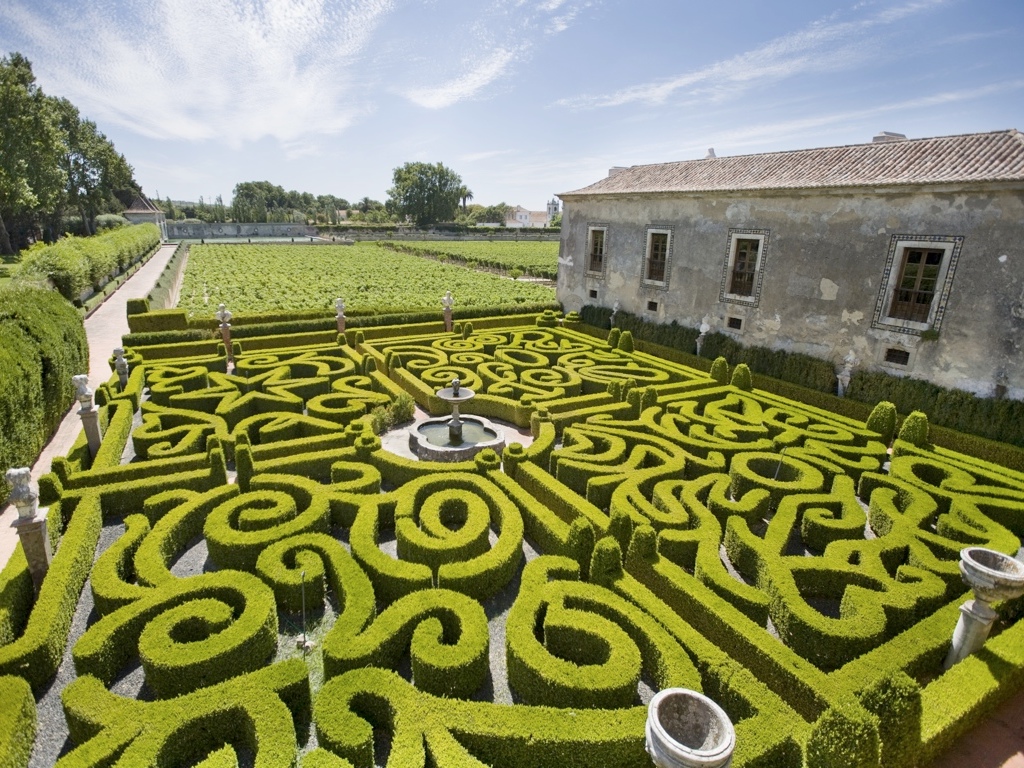
The tiled palace and gardens of Quinta da Bacalhôa near Lisbon

On All Saints' Day 1755 an earthquake, a tsunami and a fire erased most of Lisbon in a single morning. The Marquês de Pombal rebuilt the lower town on a rational grid with the world's first seismically engineered buildings — the gaiola pombalina, a timber cage inside the masonry. Walk two metres below street level at the Núcleo Arqueológico and you find the fish-salting tanks of Roman Olisipo, then a Moorish wall, then a medieval one. The city is a section drawing you can stand inside.

Founded
Phoenician trading post, c. 1200 BC
Listen for
Fado — the Alfama's melancholy song, UNESCO-listed since 2011
On the tile
Azulejo, from the Arabic az-zulayj, 'polished stone'
SintraWhere European Romanticism built its stage set+
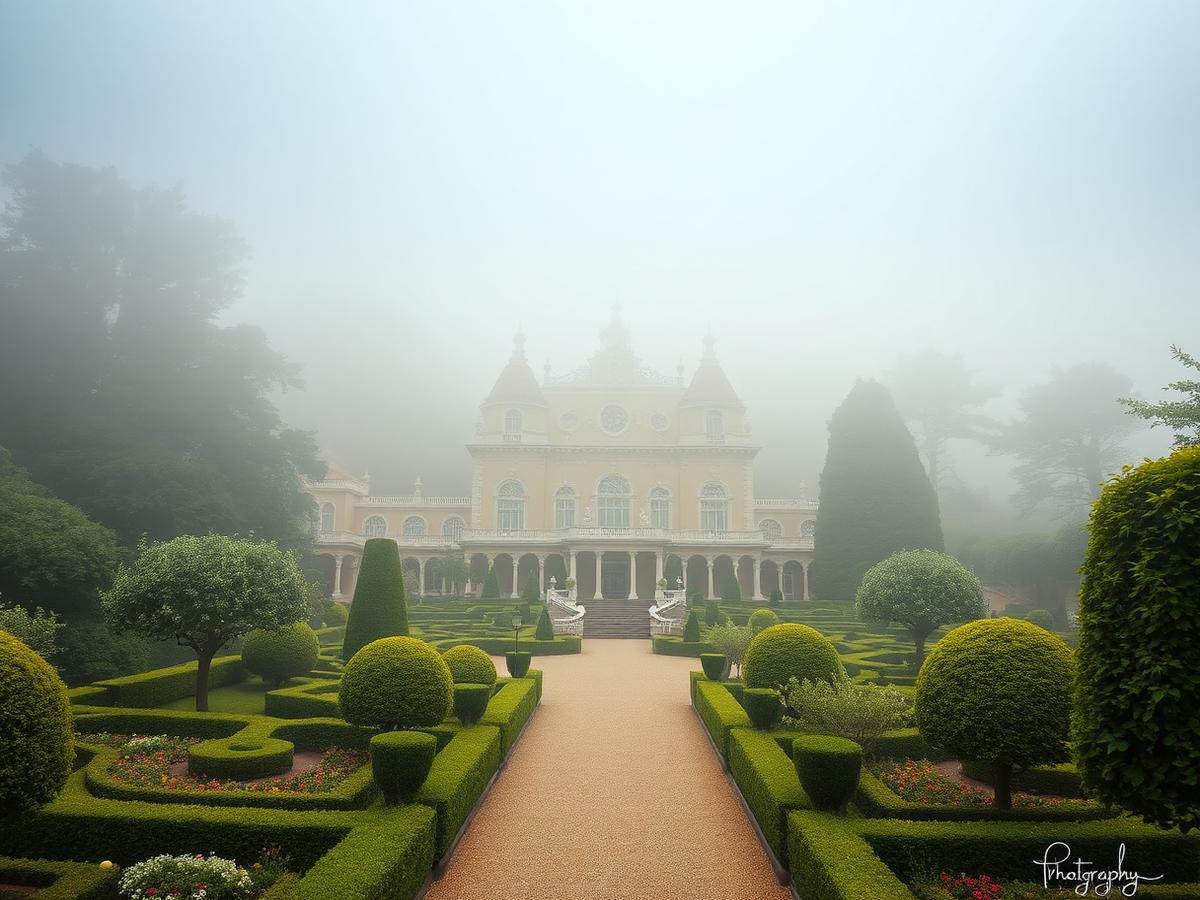
Romantic hillside palaces above Sintra

In the nineteenth century, wealthy foreigners and the Portuguese royal family turned this misty granite massif into an experiment in landscape gardening and architectural fantasy. Monserrate — an Anglo-Indian-Moorish invention with a garden of Mexican and Australian planting — is the purest surviving expression of that impulse. Sintra's microclimate, cooler and wetter than Lisbon thirty minutes away, is exactly what made the gardens possible.

Listed
UNESCO World Heritage cultural landscape, 1995
Byron wrote
"Perhaps in every respect the most delightful in Europe"
Local sweet
Travesseiro — almond and egg cream in flaked pastry
Porto & the DouroThe oldest demarcated wine region on earth+
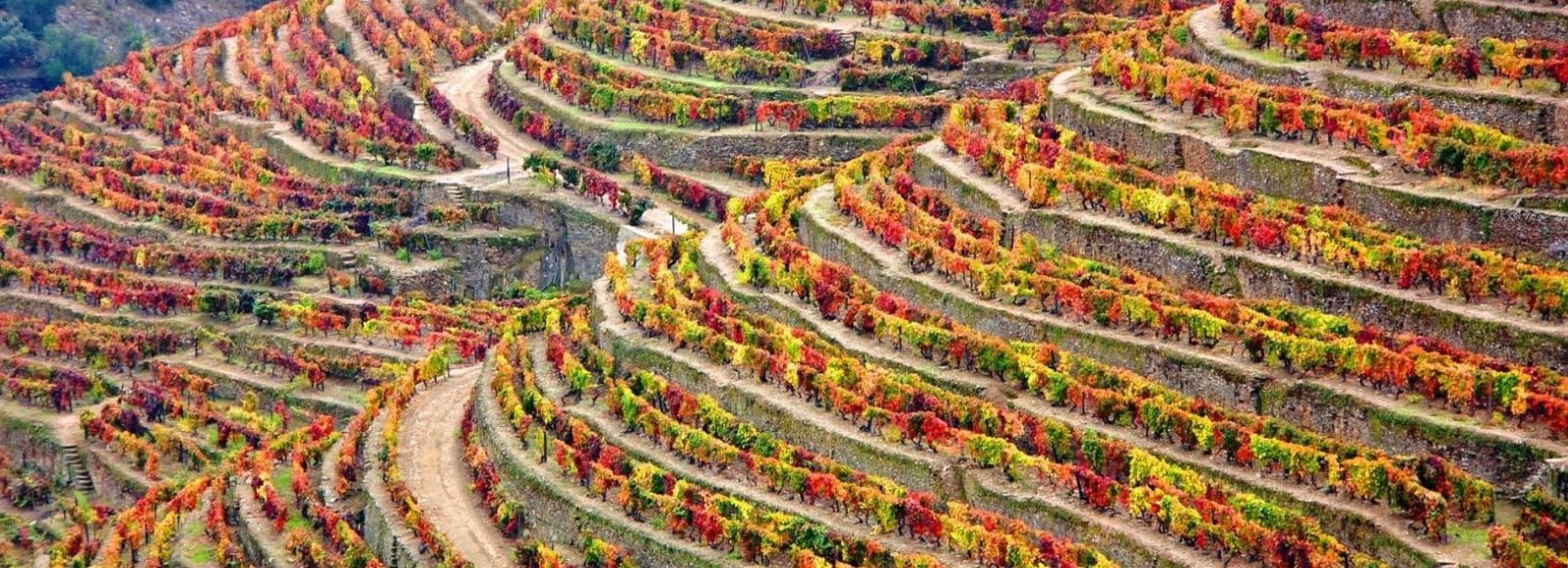
Terraced vineyards above the Douro at Pinhão

In 1756 the Marquês de Pombal drew a boundary around the Douro Valley and set rules for what could be called Port — half a century before Chianti, a century and a half before Bordeaux's classification. The terraces are cut into schist so hard the soil holds no water at the surface; vine roots go down as far as twenty metres to find it. British merchant houses — Taylor, Graham, Sandeman — established the lodges at Vila Nova de Gaia because the river brought the wine down and the sea took it out.

Demarcated
1756, by royal charter
Grapes
Touriga Nacional, Touriga Franca, Tinta Roriz and 80 more
Rabelo boats
Flat-bottomed craft that carried barrels down the rapids until the 1960s dams
AlentejoCork, marble, megaliths and the slow south+
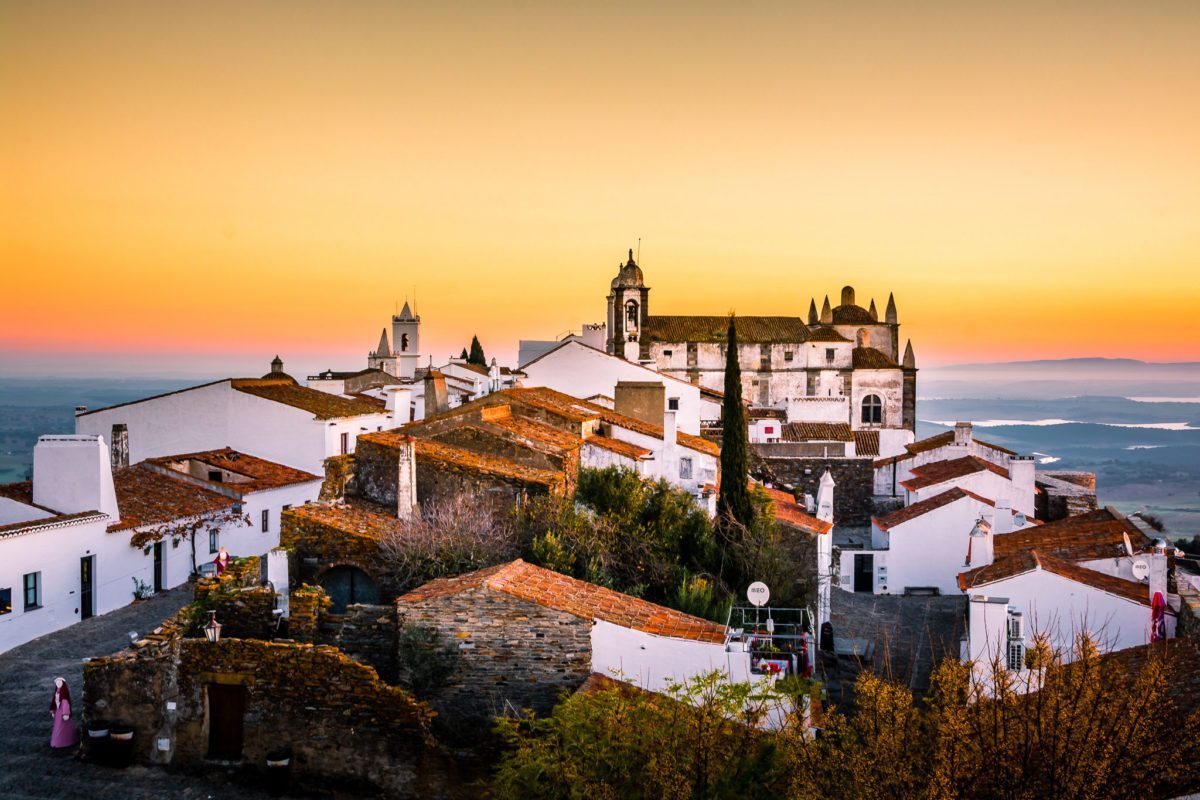
The whitewashed hill town of Monsaraz in the Alentejo

A third of the world's cork comes from these oak plantations, harvested every nine years by hand. Évora holds a Roman temple, a Gothic cathedral, a Moorish street plan and, an hour out, the Almendres Cromlech — a stone circle two thousand years older than Stonehenge. Alentejo wine has been made in clay amphorae, talhas, since the Romans; a handful of producers have brought the technique back.

Évora listed
UNESCO World Heritage, 1986
Almendres Cromlech
c. 6000 BC — the oldest stone circle in Europe
At the table
Açorda, migas, black pork from acorn-fed pigs
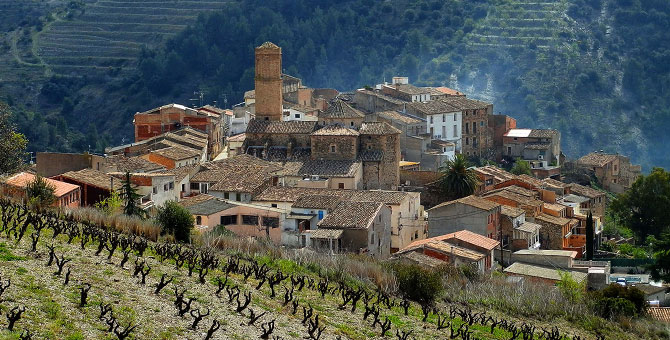
Slate-terraced vineyards in Priorat, Catalonia

Spain

Rioja · Navarra · Basque Country · Catalonia & Priorat · Galicia

Spain changes language, architecture and lunch hour every two hundred kilometres. We travel the north, where the food culture is at its most serious and the wine regions are within an easy morning of each other.

What to expect

  • Everything runs late. Lunch at 14:00, dinner at 21:00 or 22:00, and a bar that is empty at eight will be full at eleven.
  • In the Basque Country you eat standing up: pintxos are counted by the toothpick and paid at the end, one or two per bar, then you move on.
  • Wineries expect an appointment. Rioja bodegas run to strict tour times and rarely accept walk-ins.
  • Spanish is the shared language, but Basque (Euskara) and Catalan are the local ones — a greeting in either is noticed and appreciated.
  • Tipping is minimal: small change on the counter, no percentage expected.
  • August empties the cities and fills the coast; September is the harvest and the better month to be in a cellar.

Unexpected surprises

  • Basque is unrelated to any other living language on earth — no Latin, no Indo-European root at all.
  • Rioja labels tell you the ageing, not the vineyard: Crianza, Reserva and Gran Reserva are legal minimums for time in barrel and bottle.
  • Green Spain really is green. Galicia and Asturias get more rain than Ireland, and the Picos de Europa hold snow into summer.
  • Cider houses in Asturias and the Basque Country pour from height into a flat glass, a splash at a time, straight from the barrel — the txotx ritual.
  • Sherry is unfashionable at home and extraordinary at the table; a cold fino with anchovies rearranges most people's idea of the wine.
  • Spain has more land under vine than any other country, yet ranks third by volume — the vines are old, wide-spaced and low-yielding.

Quirky wine facts

  • Priorat's llicorella soil is black slate that reflects heat and forces roots twenty metres down; it is one of only two Spanish regions with DOQ/DOCa top status, alongside Rioja.
  • Tempranillo means 'the little early one' — it ripens weeks before Garnacha in the same vineyard.
  • Cava must be bottle-fermented by the same method as Champagne, and over ninety percent of it is made within a few kilometres of Sant Sadurní d'Anoia.
  • Txakoli, the Basque white, is bottled with such high acidity that it is poured from a height to knock the edge off it.
  • Rioja's American-oak tradition began when Bordeaux merchants fled phylloxera in the 1860s and taught barrel ageing to Haro's bodegas.
  • Galicia's Albariño vines are trained overhead on granite posts — pergolas that keep the fruit out of the Atlantic damp.
Language
Spanish, plus Basque, Catalan and Galician
Currency
Euro
Best months
May–June and September–October
Drive time
Bilbao to Logroño, ninety minutes

Region by region

Rioja & NavarraWhere Bordeaux taught Spain to use barrels+
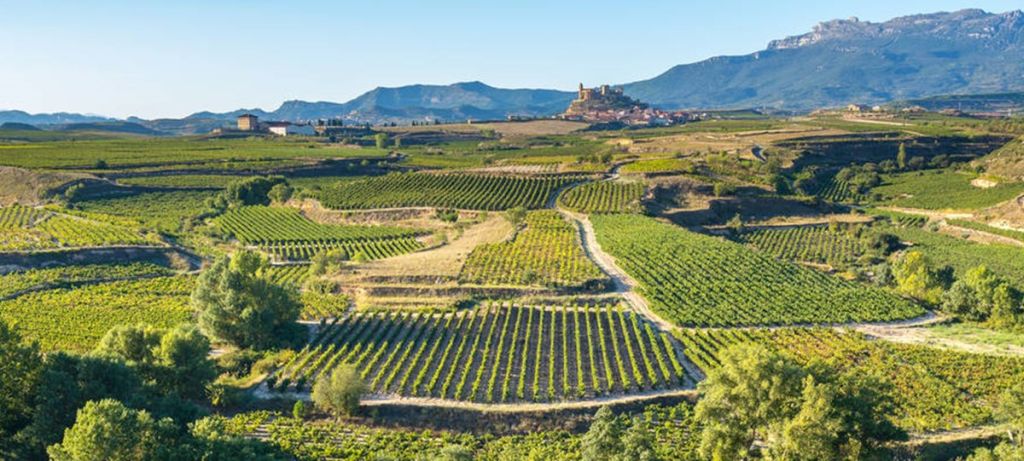
Vineyards and bodegas in La Rioja

When phylloxera destroyed French vineyards in the 1860s, Bordeaux merchants crossed the Pyrenees and settled in Haro, bringing barrel ageing with them. The old bodegas of the Barrio de la Estación still stand within walking distance of one another beside the railway that carried the wine north. Navarra, next door, kept its rosados and its pilgrim road: the Camino runs straight through the vines.

On the label
Crianza, Reserva, Gran Reserva — legal minimums for ageing
Grapes
Tempranillo, Garnacha, Graciano, Mazuelo
Also here
Ysios and Marqués de Riscal, by Calatrava and Gehry
Basque CountryA language older than Latin, and a bar counter to match+
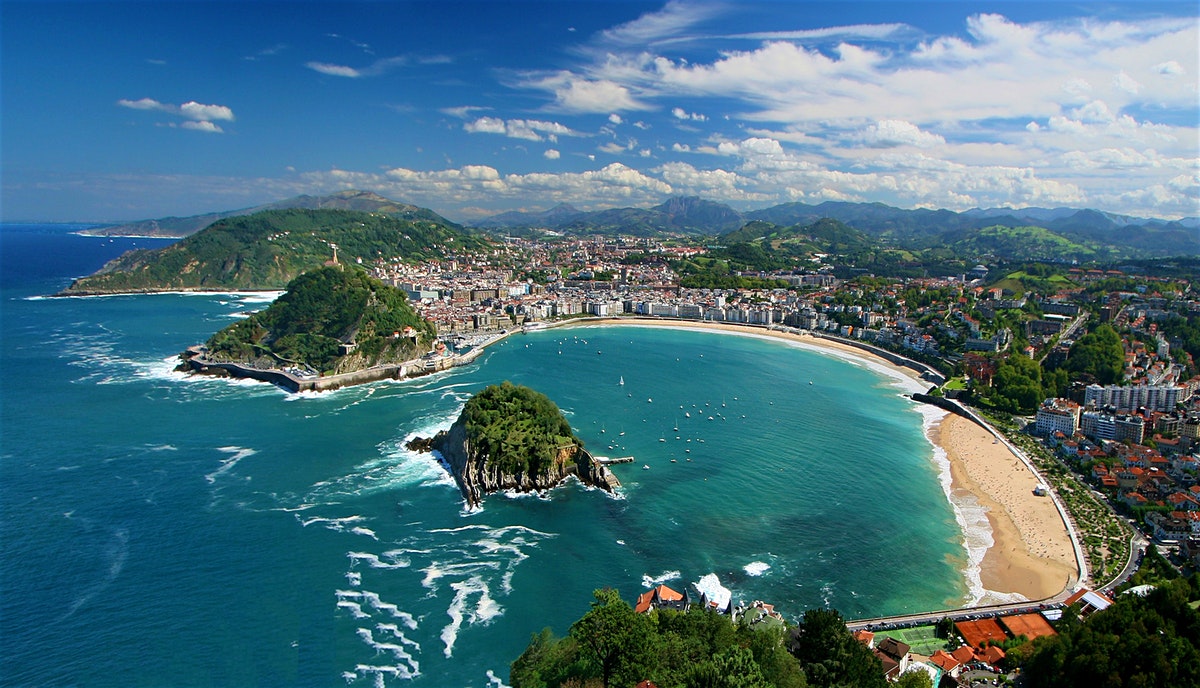
The bay and old town of San Sebastián

Euskara has no known relatives among living languages, and the culture around it is just as self-contained. San Sebastián holds one of the highest concentrations of Michelin stars per head in the world, yet the serious eating happens standing up, one pintxo per bar. Inland, cider houses pour txotx straight from the barrel between courses of cod omelette and chuletón.

Eat like this
One pintxo and one glass per bar, then move on
Local wine
Txakoli — low alcohol, high acid, poured from height
Nearby
Bilbao's Guggenheim, forty minutes west
Catalonia & PrioratBlack slate, Carthusian monks and vertical vineyards+
Slate-terraced vineyards in Priorat, Catalonia

Carthusians planted vines at Scala Dei in the twelfth century and the terraces have barely changed shape since. Priorat's llicorella — a black slate that splits vertically — forces roots down twenty metres for water and gives the wines their weight; it is one of only two regions in Spain with the top DOQ classification. An hour away, Poblet's Cistercian monastery and the cava cellars of Sant Sadurní round out the day.

Soil
Llicorella, black slate that reflects heat
Classified
DOQ Priorat — one of two in Spain, with Rioja
Listed
Poblet Monastery, UNESCO World Heritage, 1991
GaliciaAtlantic Spain: granite, rain and Albariño+
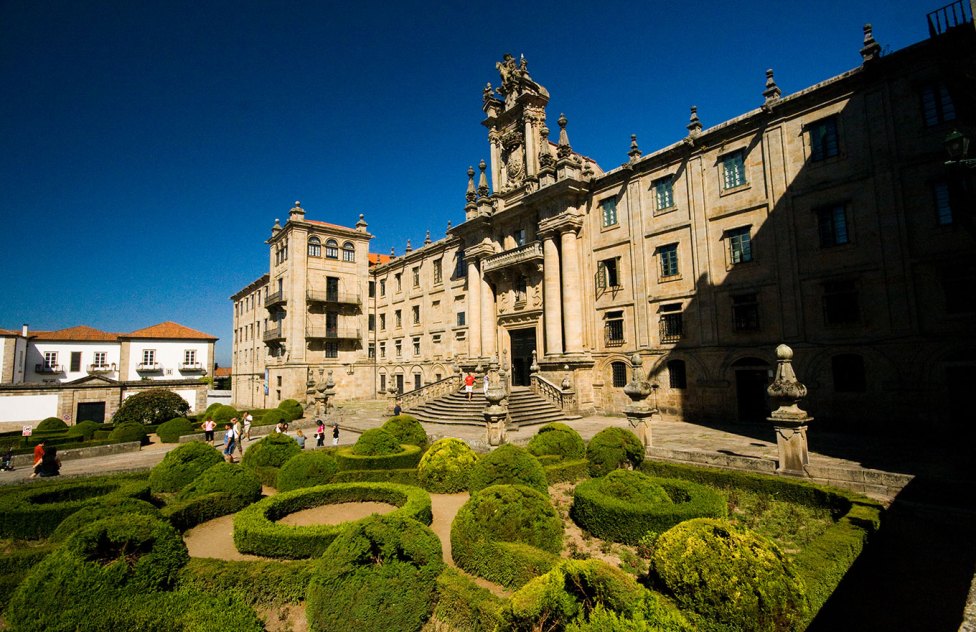
Granite convent architecture in Santiago de Compostela

Green, wet and Celtic in temper, Galicia has more in common with Brittany than with Castile. Albariño vines are trained overhead on granite posts so the Atlantic damp passes underneath the fruit. Santiago de Compostela ends a thousand-year pilgrimage, and the Rías Baixas inlets supply the shellfish that the wine was made for.

Grape
Albariño, trained on pergolas above head height
At the table
Percebes, pulpo á feira, empanada
Listed
Santiago's old town, UNESCO World Heritage, 1985
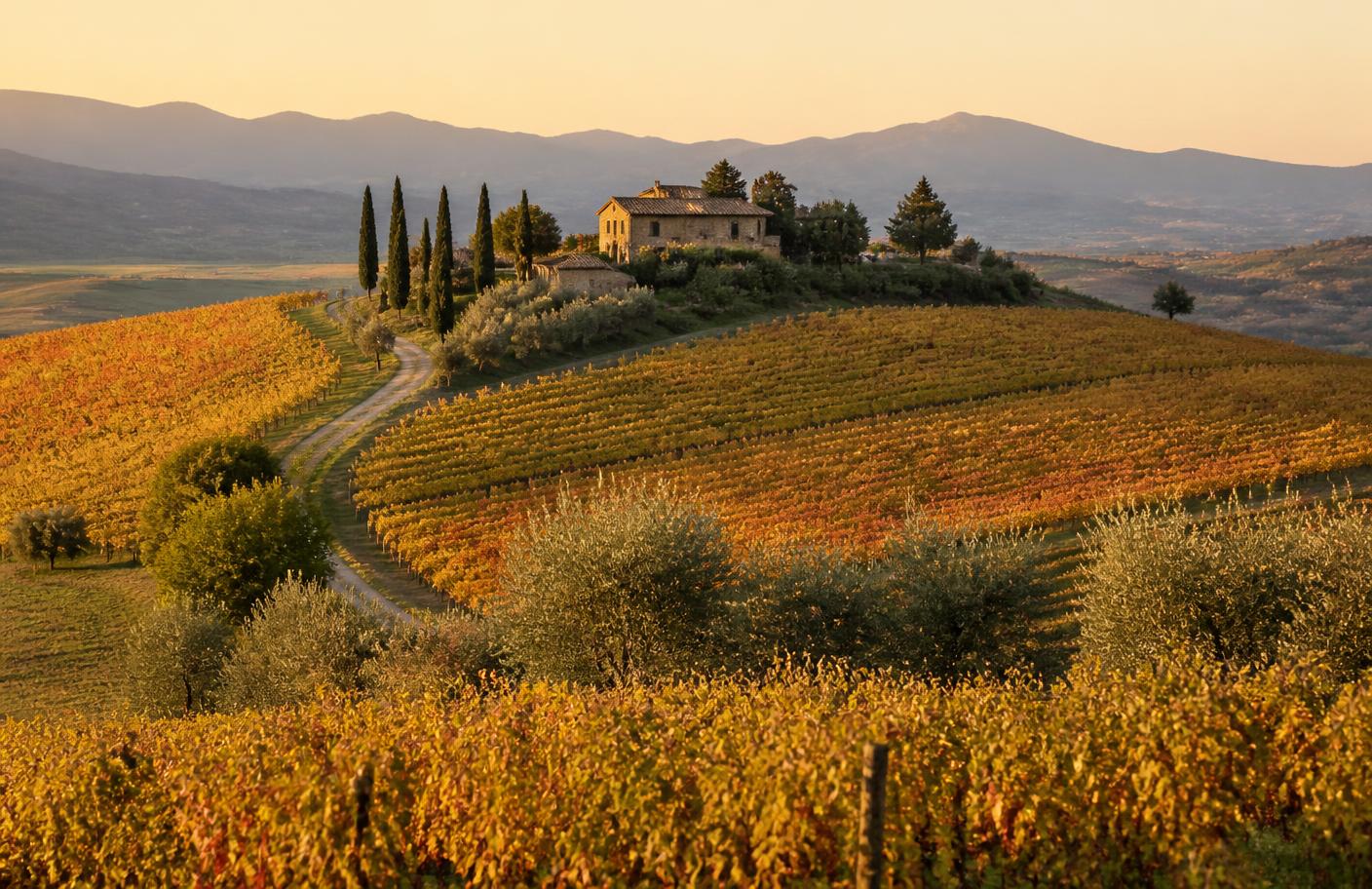
Vineyard hills and cypress trees in Tuscany at golden hour

Italy

Piedmont · Tuscany · Veneto · Sicily

Italy is a country of small places: the wine, the dialect and the dish change from one commune to the next, and the producers are usually the family whose name is on the label.

What to expect

  • Coffee is drunk standing at the bar and costs a fraction of the seated price. Cappuccino is a morning drink only.
  • Restaurants add coperto, a per-person cover charge, in place of tipping. It is printed on the menu, not a surcharge on you.
  • Courses are optional. Ordering only a primo, or only a secondo, is normal and no one blinks.
  • Cellar visits in Barolo and Montalcino are small, family-run and by appointment; harvest weeks in late September book out first.
  • Museums and churches close for the middle of the day in smaller towns, and many close on Mondays.
  • Historic centres are restricted-traffic zones (ZTL). We park outside and walk in — a short walk, always worth it.

Unexpected surprises

  • Italy has more than 500 commercially grown native grapes, the widest catalogue in the world; most never leave their province.
  • Piedmont in autumn is fog, not sun — the nebbia that gives Nebbiolo its name — and truffle season overlaps with harvest.
  • Chianti's black rooster is not branding: it settled a medieval border dispute between Florence and Siena and became the Classico seal.
  • Northern and southern cooking are different cuisines. Butter, rice and polenta in the north; olive oil, durum wheat and citrus in the south.
  • Etna's vineyards sit on active volcanic slopes up to 1,000 metres, with ungrafted, pre-phylloxera vines over a century old.
  • Almost every Italian region makes an aperitivo, a bitter and a dessert wine of its own — the drink list is regional long before it is national.

Quirky wine facts

  • Barolo and Barbaresco are the same grape, Nebbiolo, grown fifteen kilometres apart; the difference is soil, altitude and ageing law.
  • Amarone is made from grapes dried on racks for months — appassimento — concentrating sugar until the wine reaches sixteen percent naturally.
  • Brunello di Montalcino must age five years before release, six for riserva: among the longest legal minimums in Europe.
  • Marsala was created by an English merchant, John Woodhouse, in 1773, fortified to survive the voyage — the same logic as Port and Madeira.
  • Prosecco's grape was renamed Glera in 2009 so that 'Prosecco' could be protected as a place rather than a variety.
  • Vin Santo is fermented in sealed barrels for years with a mother yeast passed down through generations, and traditionally opened for guests.
Language
Italian; strong regional dialects
Currency
Euro
Best months
May–June and September–October
At the table
Coperto instead of tipping

Region by region

PiedmontFog, Nebbiolo and the truffle season+

Nebbiolo takes its name from nebbia, the autumn fog that settles in the Langhe valleys at harvest. Barolo and Barbaresco are the same grape grown fifteen kilometres apart, separated by soil, altitude and ageing law. The white truffle market at Alba opens in October, and the region's slow-food movement was founded in nearby Bra in 1986.

Ageing
Barolo, minimum 38 months; Barbaresco, 26
Listed
Langhe-Roero and Monferrato, UNESCO, 2014
In season
White truffle, October to early December
TuscanyA rooster that settled a border, and Sangiovese everywhere+
Vineyard hills and cypress trees in Tuscany

The black rooster of Chianti Classico began as the emblem of a medieval league that fixed the boundary between Florence and Siena; it is now the consortium seal. South of it, Montalcino's Brunello must age five years before release. The landscape of cypress, stone farmhouse and vine is not accidental — it is the mezzadria sharecropping system, preserved by law.

Grape
Sangiovese, under a different name in each zone
Released after
Brunello, five years; riserva, six
Listed
Val d'Orcia, UNESCO World Heritage, 2004
VenetoGrapes dried on racks through the winter+

Valpolicella's appassimento method dries harvested grapes on racks for three to four months before pressing, concentrating sugar until Amarone reaches sixteen percent alcohol without fortification. The same fruit, fermented sweet, becomes Recioto — the older of the two wines. Verona's Roman arena still fills for opera in summer, and Soave's white hills sit half an hour east.

Method
Appassimento — 100 days drying on racks
Two wines
Amarone (dry) and Recioto (sweet), same dried fruit
Nearby
Verona, Lake Garda, and the Prosecco hills
SicilyVines on an active volcano+

Etna's eastern slopes carry vineyards to a thousand metres on black volcanic sand, much of it ungrafted and pre-phylloxera — the louse cannot survive in the ash. Nerello Mascalese from these contrade tastes closer to Burgundy than to the south. Elsewhere on the island, Marsala was invented by an English merchant in 1773 for the same reason as Port: it had to survive the sea.

Altitude
Vineyards to 1,000m on Etna's slopes
Grapes
Nerello Mascalese, Carricante, Grillo, Nero d'Avola
Since
Marsala fortified for export, 1773